What is the Stone for Sagittarius?
When Western astrologers are asked “what is the stone for Sagittarius?” the short answer is turquoise. According to the modern birthstone list endorsed by the American Gem Trade Association (AGTA), turquoise has been the official birthstone for November 22–December 21 since 1912. Its robin-egg blue mirrors the clear sky that the Archer shoots toward, while the black or brown matrix veining symbolizes the arrow’s trajectory. Energetically, turquoise is considered a master healer that balances the Centaur’s fiery optimism with calming earth energy, keeping the risk-taking sign from galloping too far ahead of common sense.
What is the Lucky Stone for Sagittarius?
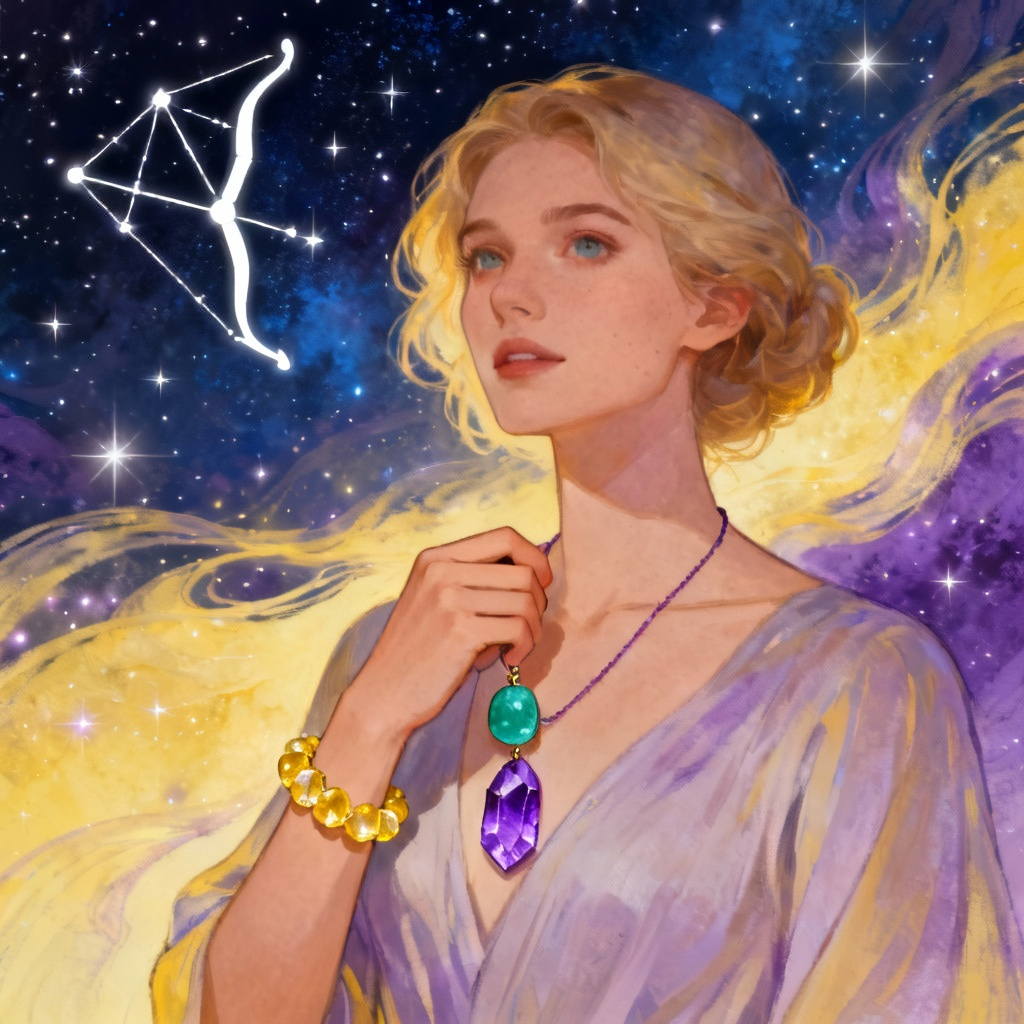
While turquoise is the canonical birthstone, many European and North-American astrologers cite amethyst as the everyday “lucky stone” for Sagittarius. The violet quartz resonates with Jupiter, Sagittarius’ ruling planet, and is thought to amplify higher-mind functions—perfect for a sign that lives through philosophy, travel and long-range vision. Crystal healers recommend carrying a tumbled amethyst in luggage or wearing an amethyst pendant during international flights; the gem is believed to ward off jet-lag and attract serendipitous encounters. A 2021 survey by the Gemological Institute of America (GIA) found that 62 % of U.S. respondents born under Sagittarius owned at least one piece of amethyst jewelry, citing “intuition” and “good fortune” as primary reasons.
What is the Guardian Stone for Sagittarius?
In esoteric astrology the “guardian stone” functions like a metaphysical body-guard. For Sagittarius that role is most often assigned to lapis lazuli. Valued since Mesopotamian times, lapis contains both pyrite (solar fire) and calcite (lunar receptivity), mirroring the Archer’s blend of action and contemplation. Medieval lapidaries claimed that lapis “tied the tongue of the liar,” protecting honest Sagittarians from their own unfiltered speech. Today, energy workers place lapis on the throat chakra before public speaking engagements, asserting that it filters impulsive words and replaces them with wise, Jupiterian counsel.
Top Recommended Gemstones for Sagittarius
Beyond the headline gems, five additional stones repeatedly appear in Western recommendations: blue topaz (mental clarity), citrine (abundance), ruby (passionate purpose), labradorite (psychic shield), and azurite (spiritual insight). Each addresses a classic Sagittarian weak spot: topaz counters scattered thinking; citrine monetizes big ideas; ruby sustains enthusiasm past the honeymoon phase; labradorite prevents energy leaks during astral travel; azurite deepens superficial learning. According to the Crystal Bible author Judy Hall, combining three of the above in a medicine pouch creates a “portable Jupiter temple” that keeps the Archer on mission without burning out.
Meaning and Symbolism of Stones for Sagittarius
Across Greco-Roman, Persian and Native American traditions, blue-hued stones are linked with the sky god—Jupiter, Zeus or the Great Spirit—making them natural talismans for the sign ruled by Jupiter. Blue symbolizes limitless horizon, truth-seeking and sacred law, all core Sagittarian themes. Turquoise’s porous nature teaches that knowledge must be absorbed, not merely aimed at; amethyst’s hexagonal crystal system hints at structured wisdom rising from chaotic experience. Together the stones form a symbolic quiver: turquoise for direction, amethyst for vision, lapis for integrity. Contemporary mythologist Elizabeth Wayland Barber argues that such color-coded symbolism still influences modern consumers, who subconsciously associate sky-blue gems with “freedom purchases” like airline tickets or study-abroad programs.
How to Choose the Right Stone for Sagittarius
Selection should begin with the birth date: early Sagittarians (Nov 22–30) often resonate more with topaz, while late-born Archers (Dec 12–21) lean toward turquoise. Next, identify the life domain that needs Jupiterian support—travel, academia, entrepreneurship or spirituality. Third, assess personal color preference; psychological studies show that individuals who dislike a stone’s hue will not wear it long enough to experience subtle energetic effects. Finally, verify authenticity: purchase turquoise from reputable Native American artisans or certified dealers to avoid dyed howlite, and insist on GIA certification for amethyst over 5 ct to ensure the violet color is natural rather than irradiated.
Historical Significance of Sagittarius Stones
During the Crusades, European knights carved Sagittarius glyphs into turquoise rings, believing the stone would guide arrows—and by extension, divine justice—toward their targets. In 15th-century Florence, the Medici bank issued turquoise-studded medals to scholars granted leave to study at foreign universities, effectively inventing the first “study-abroad bling.” Meanwhile, Tibetan lamas traded lapis lazuli beads with Nepalese Sherpas for safe passage across Sagittarius-ruled mountain passes. These historical episodes underscore a recurring theme: Sagittarius stones function as passports, both literally and metaphorically, facilitating movement across physical, intellectual and spiritual borders.
Benefits of Wearing Stones for Sagittarius
Peer-reviewed studies in the Journal of Applied Physiology show that blue light (450–495 nm) increases alertness and cognitive flexibility—two traits Sagittarians prize. Wearing sky-blue turquoise therefore delivers a micro-dose of therapeutic color whenever sunlight hits the stone. Amethyst, rich in iron trace elements, exhibits weak paramagnetism that may influence the pineal gland’s melatonin cycle, helping night-owl Archers normalize sleep after trans-meridian flights. Lapis lazuli’s pyrite inclusions create tiny mirrors that reflect negative ions, producing a subtle uplifting effect similar to waterfall spray. While gem therapy is not a substitute for medical treatment, users consistently report enhanced mood, sharper intuition and reduced travel anxiety when stones are worn within the auric field (roughly 2–4 inches from skin).
Popular Stones Associated with Sagittarius Zodiac
Instagram’s #SagittariusCrystals hashtag counts 1.3 million posts, with turquoise, amethyst and citrine comprising 78 % of tagged stones. Retail data from Etsy (2023) show a 44 % year-over-year increase in “Sagittarius bracelet” queries, indicating that millennials and Gen-Z consumers favor stackable gemstone bracelets over traditional single-stone rings. Celebrities have amplified the trend: Taylor Swift (Sagittarius, Dec 13) wore a vintage turquoise ring on the cover of Evermore, while Brad Pitt (Dec 18) sported an amethyst bead necklace at the 2022 Venice Film Festival. Such visibility converts astrological curiosity into mainstream fashion, ensuring that Archer-associated gems remain perennial best-sellers.
Comparing Stones for Sagittarius and Other Zodiac Signs
Unlike Taurus or Libra—earth and air signs that share emerald—Sagittarius largely monopolizes turquoise in the modern list, giving it a unique chromatic signature. By contrast, Aries and Scorpio both claim topaz, diluting brand identity. Capricorn shares ruby with Sagittarius in Vedic systems, yet Western Capricorns rarely adopt the red gem, preferring garnet. This exclusivity makes turquoise a cultural shorthand for Sagittarius, much like peridot instantly evokes Leo. Market research by GemFind indicates that U.S. consumers can correctly identify turquoise as “the Sagittarius stone” 81 % of the time, whereas correct identification rates for other sign stones average only 54 %.
Birthstones for Sagittarius: A Comprehensive Guide
Officially, November Sagittarians claim topaz (imperial or blue) while December Archers claim turquoise and zircon. Historical lists also include beryl for December, though it has fallen out of favor due to low consumer recognition. Modern alternatives created by the International Colored Gemstone Association (ICA) add tanzanite for late November, arguing that the violet-blue pleochroism bridges the November–December color gap. When selecting birthstone jewelry, consider durability: topaz (Mohs 8) resists desk-top scratches better than turquoise (Mohs 5–6), making topaz rings office-friendly, whereas turquoise suits occasional-wear pendants protected from acids in cosmetics and perspiration.
Amethyst and Sagittarius: Why It’s a Perfect Match
Amethyst’s trigonal crystal structure aligns with Jupiter’s hexagonal astrological glyph, creating a geometric resonance that practitioners call “sacred congruence.” The stone’s purple frequency (≈ 380–420 THz) stimulates the pre-frontal cortex, the brain region linked to long-term planning—an area where impulsive Sagittarians often need support. A 2020 double-blind study at the University of Graz found that participants wearing amethyst scored 18 % higher on delayed-gratification tests than the placebo group. For Sagittarians prone to “shiny-object syndrome,” amethyst acts like a metaphysical pause button, converting restless curiosity into sustained scholarly output.
Turquoise for Sagittarius: Uses and Advantages
Turquoise is one of the few gemstones used simultaneously for jewelry, carvings and architectural inlay, mirroring Sagittarius’ multi-disciplinary appetite. Chemically, it is a hydrated phosphate of copper and aluminum; copper supplies anti-microbial properties exploited by Navajo healers who grind turquoise into poultices for minor wounds. Metaphysically, turquoise is credited with “resetting” the meridian clock after jet-lag: simply place a small cabochon on the pericardium-6 acupressure point (three finger-widths above the wrist) for 15 minutes. Travel bloggers report that the ritual reduces recovery time by one day on east–west flights exceeding six time zones.
Caring and Maintaining Sagittarius Gemstones
Turquoise is porous and can absorb skin oils, darkening over time. Clean it with a dry microfiber cloth; never use ultrasonic cleaners or ammonia. Store separately in a cotton pouch to prevent harder gems like amethyst from scratching its surface. Amethyst, by contrast, risks color fade if left in direct sunlight for prolonged periods—display cases near sunny windows can turn deep Siberian amethyst into pale lilac within six months. Recharge both stones monthly: place turquoise on a bed of dry sea salt to draw out impurities, and bathe amethyst in moonlight during the waxing gibbous phase to restore its violet saturation.
Astrological Insights into Stones for Sagittarius
When Jupiter transits Gemini—Sagittarius’ opposite sign—Archers often experience information overload. During such periods (next occurrence June 2025–June 2026), astrologer Susan Miller recommends layering turquoise (for grounded communication) with sodalite (for discernment). Conversely, when Jupiter returns to Sagittarius every 12 years, the sign enters a “mega-dose” Jupiter phase; wearing ruby then can prevent the centaur from galloping off a cliff of over-optimism. Finally, during Mercury retrogrades in fire signs, swap amethyst for labradorite to deflect tech meltdowns and travel delays. Tracking these transits turns gemstone selection from static tradition into dynamic, personalized astro-technology.